 Starday
Daily Routine Checklist for Kids Ages 4–6
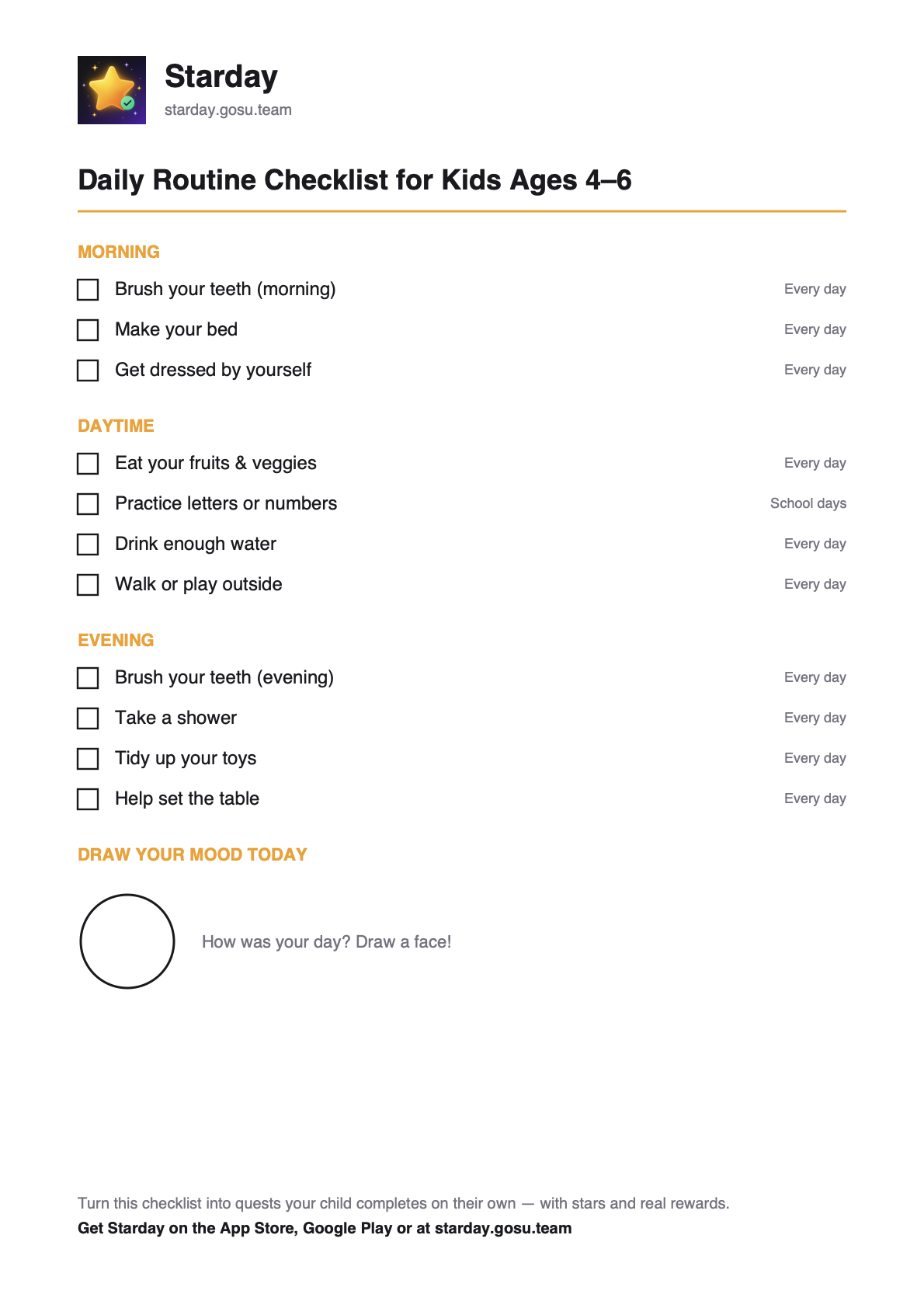
At 4–6, routines work best when they are small, visual, and celebrated. This checklist keeps tasks short and concrete — the same "Little Adventurer" pack that ships in the Starday app, where each task becomes a quest worth stars.
🌅 Morning routine for 4–6 year olds
- 🪥Brush your teeth (morning)Every day
- 🛏️Make your bedEvery day
- 👕Get dressed by yourselfEvery day
☀️ Daytime routine for 4–6 year olds
- 🥦Eat your fruits & veggiesEvery day
- ✏️Practice letters or numbersSchool days
- 💧Drink enough waterEvery day
- 🌳Walk or play outsideEvery day
🌙 Evening and bedtime routine for 4–6 year olds
- 🦷Brush your teeth (evening)Every day
- 🚿Take a showerEvery day
- 🧸Tidy up your toysEvery day
- 🍽️Help set the tableEvery day
🖨️ Download this checklist as a printable PDF
Turn this checklist into quests
Paper charts die in a week. In Starday, every task on this list becomes a quest your child checks off on their own — earning stars they spend in a rewards shop you control. One family code syncs every device.


Parents ask
How to start a daily routine with a 4-year-old?
Start with two or three tasks, not the whole list. Pick the ones that cause the most friction (getting dressed usually wins), make them visual with pictures or emoji, and celebrate immediately — at this age the reward has to land within minutes, not at the end of the week. Add tasks one at a time once the first ones feel automatic.
How to get a preschooler to tidy up their toys?
Make it a game with a clear finish line: race one song, tidy one category ("all the blocks, go!"), use bins with picture labels so "away" means something. Tidying "everything" is overwhelming at 4–6; tidying "the animals" is a quest they can win.
Should kids ages 4–6 have chores?
Yes — small helper tasks like setting the table or feeding a pet. At this age chores are about identity ("I'm a helper"), not output, so expect imperfect results and praise the contribution. Never use chores as punishment; that teaches kids that helping is what happens when things go wrong.
How to use rewards without spoiling a young child?
Reward consistency, not compliance — the streak of made beds, not one made bed under protest. Keep rewards small, immediate, and mostly experiences (a park trip, choosing the movie). In Starday, parents set the rewards shop and the star prices, so the economy stays in your hands.
More checklists
- Daily Hygiene Checklist for Kids
- Daily Routine Checklist for Kids Ages 7–9
- Daily Routine Checklist for Kids Ages 10–12
- Daily Routine for Teens (Ages 13–16)
- Kids Vitamins & Supplements Checklist
- Language Learning Routine for Kids
- Music Practice Routine for Kids
- Sports & Movement Routine for Kids
- Healthy Eating Checklist for Kids
- Chores for Teens (Ages 13–16)