 Starday
Daily Routine for Teens (Ages 13–16)
Teenagers do not need reminders — they need a system they run themselves. Below is a sample schedule for a 13-year-old on a school day and at the weekend, then the "Teen Hero" checklist from Starday: laundry, cooking one meal a week, reviewing notes, and planning tomorrow before bed.
🕖 Sample daily schedule for a 13-year-old (school day)
| 6:45 am | Wake up, make your bed |
| 7:00 am | Brush teeth, get dressed |
| 7:20 am | Breakfast |
| 7:45 am | Leave for school |
| 3:30 pm | Home: snack and a short break |
| 4:00 pm | Homework, then review today’s notes |
| 5:15 pm | Exercise or sports practice |
| 6:30 pm | Dinner (cook it yourself once a week) |
| 7:30 pm | Free time and screens |
| 9:00 pm | Shower, read for 30 minutes, plan tomorrow |
| 9:45 pm | Phone charges outside the bedroom |
| 10:00 pm | Lights out |
Teens need 8–10 hours of sleep, according to the American Academy of Sleep Medicine, so build the day backwards from the time they have to get up. The same schedule works for boys and girls; shift it to fit your school’s start time and practice days.
🗓️ Weekend routine for teens
| 9:00 am | Wake up, make your bed |
| 9:30 am | Breakfast |
| 10:00 am | Weekly jobs: clean your room, do your laundry |
| 12:30 pm | Lunch |
| Afternoon | Friends, sport, hobbies |
| 6:00 pm | Cook dinner for the family |
| Sunday evening | Pack your bag and plan the week |
| 10:30 pm | Lights out |
Keeping the weekend wake-up within a couple of hours of the school-day one makes Monday mornings much easier.
🌅 Morning routine for teens
- 🪥Brush your teeth (morning)Every day
- 🛏️Make your bedEvery day
☀️ After-school routine for teens: study, exercise and chores
- 📝Do homeworkSchool days
- 📖Read for 30 minutesEvery day
- 🏃ExerciseEvery day
- 🧹Clean your roomSaturday
- 🍳Cook a mealFriday
- 📚Study / review notesSchool days
- 🥦Eat your veggiesEvery day
- 🍎Eat a piece of fruitEvery day
- 💧Drink enough waterEvery day
🌙 Evening routine for teens
- 🦷Brush your teeth (evening)Every day
- 🚿Take a showerEvery day
- 👕Do your laundryWednesday
- 📋Plan tomorrowEvery day
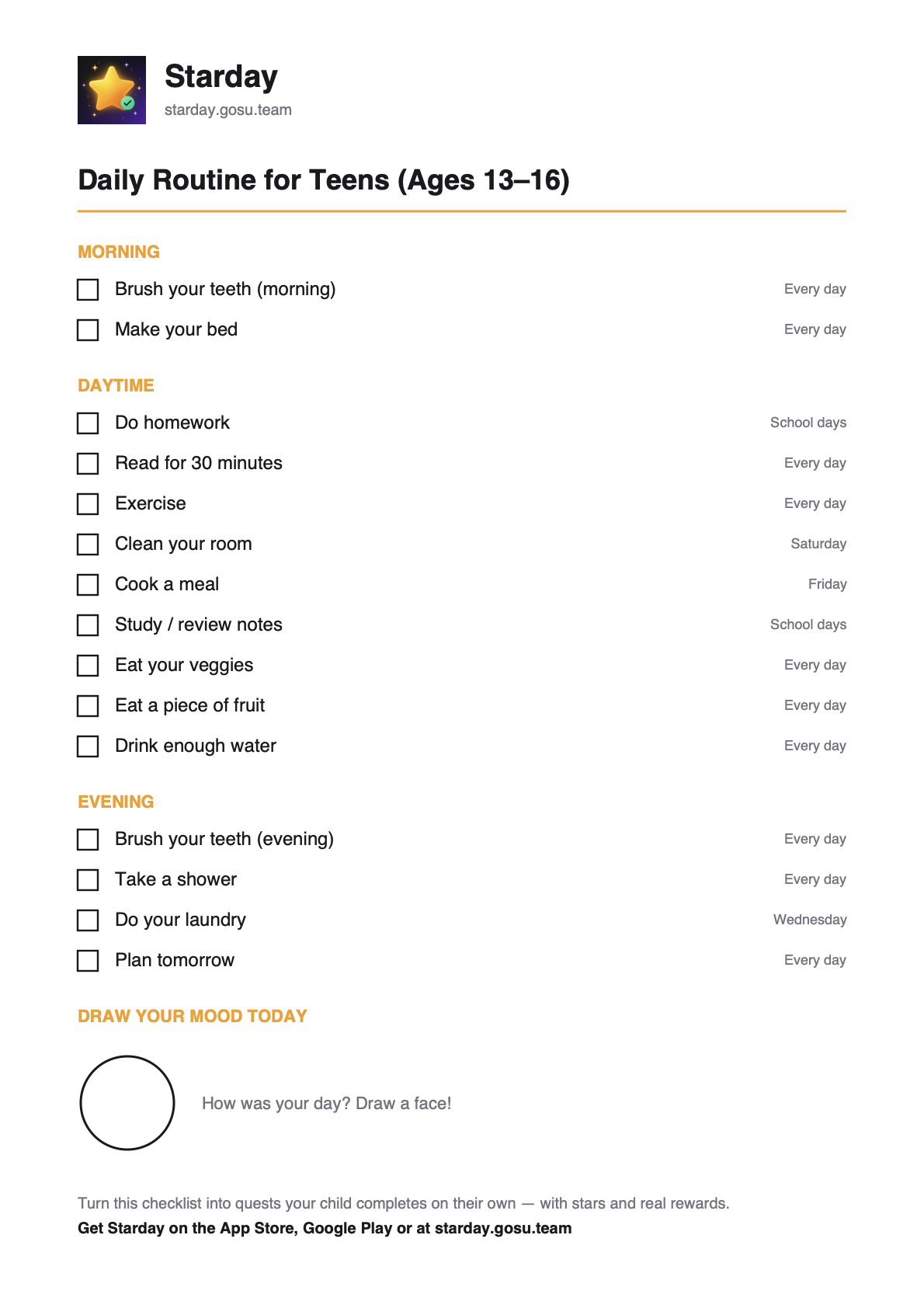
🖨️ Download this checklist as a printable PDF
Turn this checklist into quests
Paper charts die in a week. In Starday, every task on this list becomes a quest your child checks off on their own — earning stars they spend in a rewards shop you control. One family code syncs every device.


Parents ask
What should a 13-year-old’s daily routine look like?
On a school day: up around 6:45, school, then homework before screens, some exercise, dinner, free time, and a wind-down that ends with lights out around 10 so they get the 8–10 hours of sleep teens need. The routine is the same for boys and girls — what changes it is the school start time and practice days, so build it backwards from the wake-up time. The sample schedule above is a good starting point.
How to get a teenager to help around the house?
Negotiate like you would with a roommate: clear ownership ("laundry is yours, Wednesdays"), real deadlines, and no silently re-doing their work — redoing it teaches them their effort doesn't matter. Tie privileges to follow-through on the agreed system, not to your mood in the moment.
How to teach teens life skills before they leave home?
One skill a season, practiced weekly: a semester of doing their own laundry, a season of cooking one family meal a week, then budgeting. Let them fail safely — a shrunk sweater or a bland dinner now is cheap tuition compared to learning it all at once at 18.
Should a teenager still have a routine checklist?
Yes — but they should own it, not you. A teen who plans tomorrow each evening and tracks their own streaks is building an executive-function habit that outlasts the checklist. Your role shifts to a weekly review of how the system is working, never a daily inspection.
More checklists
- Daily Hygiene Checklist for Kids
- Daily Routine Checklist for Kids Ages 4–6
- Daily Routine Checklist for Kids Ages 7–9
- Daily Routine Checklist for Kids Ages 10–12
- Kids Vitamins & Supplements Checklist
- Language Learning Routine for Kids
- Music Practice Routine for Kids
- Sports & Movement Routine for Kids
- Healthy Eating Checklist for Kids
- Chores for Teens (Ages 13–16)